


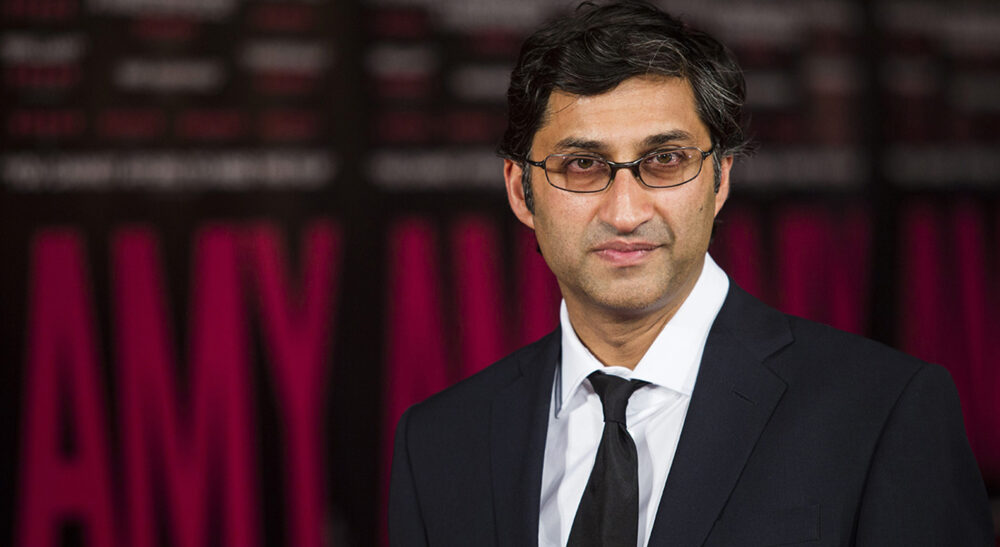
With 2073, Asif Kapadia introduces a paradigm shift in documentary filmmaking, anchoring his latest work in real-world footage while projecting a dystopian future that feels alarmingly close. Unlike traditional documentaries that reconstruct past events, Kapadia’s film reconstructs the future using the present. The film’s lead character, Ghost, lives in a collapsed world, hiding beneath a ruined cityscape patrolled by surveillance drones and governed by unchecked authoritarian regimes. But the film’s force lies not in its fiction—it lies in how truth is layered into every image.
Asif Kapadia’s method is defined by contradiction. The film, set decades ahead, avoids speculative design. Instead, he draws from current news clips, environmental disasters, and political unrest. Viewers recognize the burned forests, the orange skies, and the familiar faces of real-world leaders. These are not imagined projections; they are lifted directly from documented reality. This visual language destabilizes the viewer’s sense of time, making the future feel disturbingly present.
The production process of 2073 was shaped by urgency and innovation. The script was completed in just three weeks, a decision spurred by a looming writers’ strike. Asif Kapadia and co-writer Tony Grisoni opted for two editorial teams: Chris King edited the documentary footage, while Sylvie Landra oversaw the fictional sequences. This structural division mirrored the film’s thematic one—the blurred line between reality and constructed narrative. Their work was complemented by LED volume stage production, enabling scenes to unfold in immersive digital environments populated by archival fragments.
Central to 2073 are voices of resistance. Journalists Maria Ressa, Rana Ayyub, and Carole Cadwalladr appear throughout, not as isolated interviewees but as embedded witnesses. Their inclusion reflects Kapadia’s shift from personal biography to systemic critique. In previous films, his subjects—Senna, Winehouse, Maradona—were individuals battling external pressures. In 2073, the battle is universal. The system itself becomes the subject, and its collapse is narrated not by fictional protagonists, but by those who confront its real-world mechanisms daily.
Asif Kapadia’s cinematic language continues to evolve. His use of documentary footage alongside speculative drama creates what he describes as a cinematic mirror. His goal is not to imagine the unimaginable but to reassemble the seen and ignored. By capturing recognizable events and placing them within a dystopian narrative, he avoids the comfort of abstraction. The viewer is forced to reconcile their awareness with their inaction. The result is a visual indictment of collective complacency.
Another innovation in 2073 is the film’s aural design. Working with longtime collaborator Antonio Pinto, Kapadia constructed a score before the visual edit was complete. This decision allowed the music to shape the film’s mood across both narrative tracks—documentary and dramatized. The score blends orchestral tension with synthetic dissonance, reinforcing the collapse of binaries throughout the film: past and future, truth and fiction, fiction and memory.
2073 is neither a journalistic exposé nor a pure dramatic allegory. It is a hybrid, a work that resists categorization by design. Kapadia does not tell viewers what to think. He assembles the fragments, aligns them with familiar echoes, and lets the implications take form. His belief is that cinema can do more than recount; it can reconfigure. With this project, he positions filmmaking as an act of political observation—a form of seeing that is neither passive nor speculative, but charged with consequence.
Asif Kapadia has long experimented with narrative structure, but with 2073, he ventures into new territory: narrative as confrontation. The film reveals not just what is happening, but how such realities have been normalized. The real question it poses is not whether this future can be prevented, but whether audiences can still be moved to recognize that it has already begun.